
 ไทย
ไทย Indonesia
 Tiếng Việt
 Filipino
Hydraulic Elevator Equipment
Hydraulic Elevator Equipment is a reliable and widely used lifting system designed to transport people, goods, and materials between different levels of a building. It operates through the principle of hydraulic pressure, using a fluid-driven piston to move the elevator car smoothly and safely. Compared with other elevator systems, hydraulic equipment is often favored for low- to mid-rise buildings because of its strong lifting capacity, stable operation, and relatively simple structure.A typical hydraulic elevator system consists of several main components, including the elevator car, hydraulic cylinder, piston, pump unit, control valve, fluid reservoir, and safety devices. When the pump pushes hydraulic oil into the cylinder, pressure builds up and drives the piston upward, lifting the car. To lower the elevator, the valve releases the oil back into the reservoir in a controlled manner, allowing the car to descend gently under its own weight. This mechanism provides smooth acceleration and deceleration, which contributes to passenger comfort and cargo safety.One of the major advantages of hydraulic elevator equipment is its ability to handle heavy loads. It is especially useful in warehouses, hospitals, commercial buildings, and residential structures where lifting performance and durability are important. Because the equipment does not require a large overhead machine room or complex traction system, installation can be more flexible in many building layouts. It also offers good adaptability for applications such as freight elevators, wheelchair-accessible platforms, and car lifts.Safety is a key feature of hydraulic elevator equipment. Modern systems are equipped with emergency stop functions, overload protection, pressure relief valves, and manual lowering devices. These features help prevent accidents and ensure reliable operation under different working conditions. Regular maintenance, such as checking hydraulic oil levels, inspecting seals, and cleaning components, is essential to keep the system running efficiently and to extend its service life.Energy consumption is another factor to consider. Hydraulic elevators generally use power mainly during upward travel, while downward movement relies largely on gravity. This can make them efficient in certain applications, although energy use depends on the size of the load, frequency of operation, and system design. Advances in hydraulic technology have also improved noise reduction, control precision, and environmental performance.In summary, hydraulic elevator equipment is a practical, durable, and cost-effective solution for many vertical transportation needs. Its simple operating principle, strong lifting capability, and dependable safety features make it an important choice in modern buildings and industrial environments.
Products
Category:
-
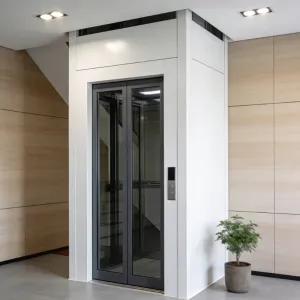
Residential Villa Professional Backpack Small Home Elevator Manufacturer
Category: Hydraulic Backpack-type Home ElevatorBrowse number: 164Number:Release time: 2026-07-08 14:19:37Residential Villa Professional Backpack Small Home Elevator Manufacturer
News
Category:
No search results found!
Case
Category:
No search results found!
Video
Category:
No search results found!
Download
Category:
No search results found!
Job
Category:
No search results found!
Featured Products
No search results found!



 Phone
Phone